Govern business operations from one intelligent platform
Connect finance, workforce, legal, tax, compliance, procurement, evidence, analytics, and governed AI through policy-aware workflows built for multi-entity, multi-jurisdiction organizations.
Capabilities, jurisdictions, integrations, and deployment options vary by market, configuration, subscription, and implementation status.

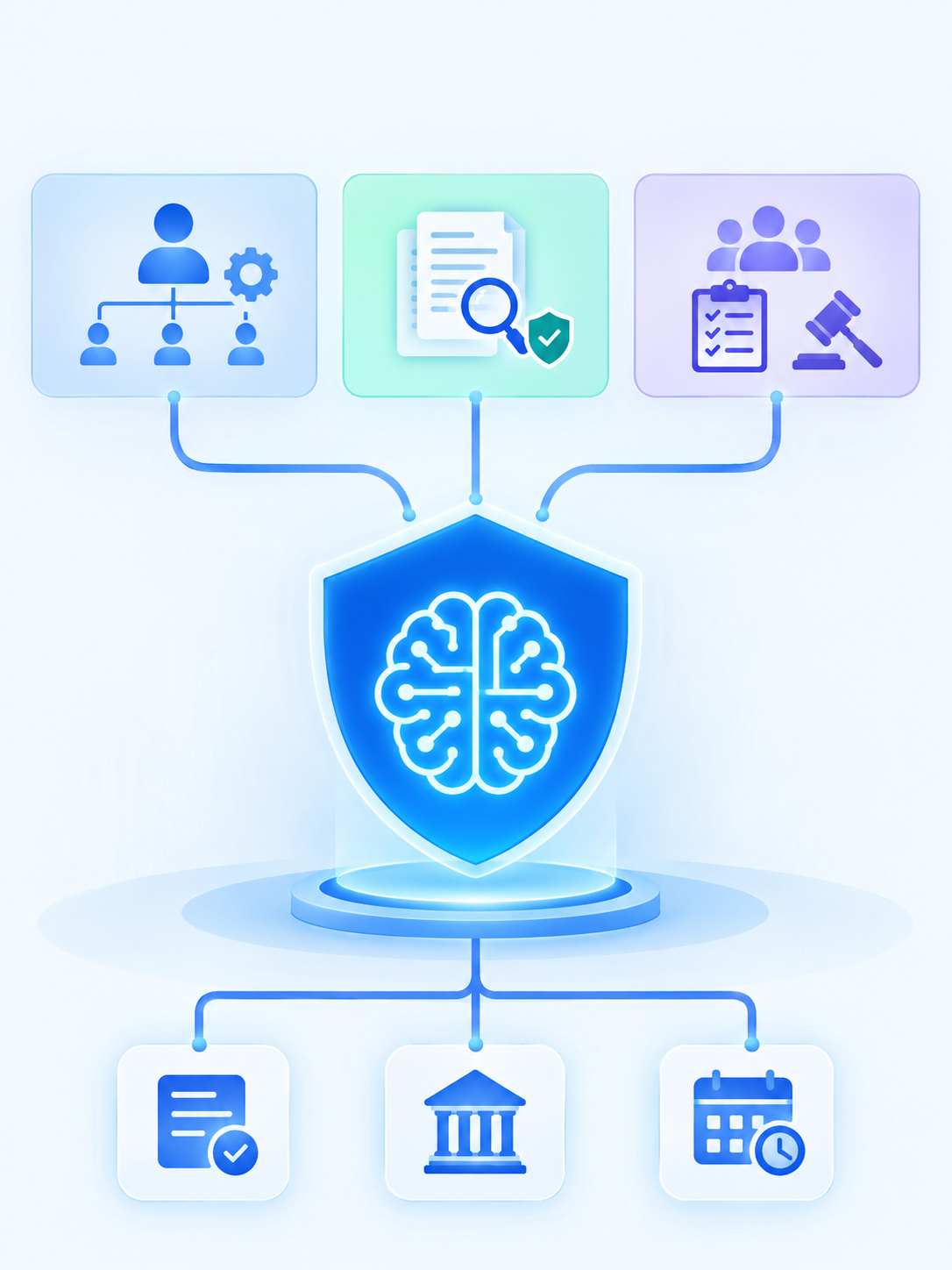
ZoikoSuite is a governed business operations intelligence platform that connects finance, workforce, legal, tax, compliance, procurement, evidence, analytics, and governed AI. It helps multi-entity and multi-jurisdiction organizations execute work through policy-aware workflows, approvals, delegated authority, and reviewable evidence.
Operations
Coordinate business actions across functions, entities, and jurisdictions.
Governance
Apply policies, roles, approvals, delegated authority, and segregation of duties.
Evidence
Preserve attributable decision records, supporting documents, and audit-ready context.
Operations fragment when governance lives outside execution
Finance, workforce, legal, tax, compliance, procurement, and reporting often operate across disconnected systems, spreadsheets, inboxes, and manual approvals. That separation makes authority harder to verify, obligations harder to track, and evidence harder to assemble.
Fragmented authority
Approval limits, delegated authority, and ownership become difficult to verify at the moment of action.
Jurisdictional inconsistency
Rules, obligations, and deadlines vary across entities and markets.
Evidence gaps
Decisions, documents, policy reasons, and approvals are stored in different places.
Delayed assurance
Audit and compliance teams reconstruct events after the fact.
ZoikoSuite is designed to bring execution, governance, and evidence into the same operating context.
See how that worksThese risks describe patterns commonly reported in multi-entity operations. Not every organization experiences all four.
Execution, governance, and evidence work together
Select a layer to see which part of a real business action it controls. All three descriptions stay on the page.
Execute
Business modules initiate and complete work across finance, workforce, legal, tax, compliance, procurement, and commercial operations.
Govern
Policies, jurisdiction rules, roles, approvals, delegated authority, segregation of duties, and exceptions shape what may happen and who may authorize it.
Evidence
Decision records, source documents, policy reasons, approvals, timestamps, and outcomes remain attributable and reviewable.
Vendor payment proposed
A procurement owner submits a payment request against an approved purchase order.
Jurisdiction and policy evaluated
Entity, tax treatment, spend policy, and segregation-of-duties rules are resolved for this action.
Delegated approver confirms — human authorization
A named approver with a verified authority limit makes the decision. The platform does not authorize material actions on its own.
Evidence manifest created
The decision, policy references, documents, before and after values, and timestamps are linked into one retrievable record.
Outcome and exceptions reported
The action, its exceptions, and its evidence state appear in operational and governance reporting.
Thirty capabilities, three groups, one control model
Modules execute work. Governance controls how work proceeds. The foundation connects, deploys, and evidences the platform. Canonical labels only — the top items are visible and the full list opens in place.
Core Modules
Where business work is initiated and completed.
Governance Platform
What decides whether, how, and by whom work may proceed.
Platform Foundation
How the platform connects, scales, deploys, and preserves evidence.
Find the evidence your role is accountable for
The platform taxonomy does not change by role. Only the examples and recommended resources do.
Govern finance across entities
Govern finance, treasury, approvals, revenue integrity, close, consolidation, controls, and evidence across entities.
Financial governance
Start with entity scope, approval authority, and close evidence. Bring your entity list and approval matrix to the demo.
Enterprise Operations Command Center
Role-aware attention management: what needs a decision, who is authorized to make it, what evidence exists, and what happens next.

Put governance inside the work — not after it
ZoikoSuite is designed to evaluate policy, jurisdiction, authority, approvals, and evidence in the context of the action being proposed.
Policy Management
Author, version, and effective-date the rules that govern each action.
Jurisdiction Intelligence
Resolve the rules that apply to this entity, this market, and this transaction.
Workflow & Approvals
Route work to the roles accountable for it, with deadlines and escalation.
Delegated Authority
Model who may authorize what, within which limits, for which period.
Segregation of Duties
Detect and block conflicting roles at the moment of the decision.
Evidence Management
Require, attach, and preserve the records a decision depends on.
Audit Readiness
Keep decisions, reasons, and outcomes retrievable for review.

Operate across entities without losing accountability
Model organizational scope, ownership, policy inheritance, reporting relationships, and local exceptions while preserving entity-level evidence.

Coordinate obligations across jurisdictions with visible coverage status
Organize jurisdiction-specific rules, obligations, filing calendars, policy overlays, evidence, and responsible owners. Coverage and integrations always show verified status.

Preserve the evidence behind every material decision
ZoikoSuite is designed to link actions with their source records, applicable policies, reviewers, approvals, timestamps, exceptions, and resulting evidence.
Faster evidence retrieval
Assemble a scenario package instead of reconstructing history across systems.
Clearer attribution
Each decision names the actor, role, authority basis, and affected object.
Reviewable policy reasons
The rule version and effective date that applied are stored with the decision.
Visible exceptions and controlled export
Exceptions carry compensating controls; exports are permission-gated and audited.

Use AI within defined authority, evidence, and review
ZoikoSuite may use AI to summarize records, identify obligations, propose classifications, surface exceptions, and support workflows. AI outputs remain subject to configured policy, evidence, role permissions, and qualified human review.
Allowed use cases
Summarization, obligation identification, classification proposals, exception surfacing, workflow support.
Prohibited use cases
Autonomous authorization of material actions; regulated professional determinations; any output presented as advice.
Source requirements
Only authorized sources within the user's permission and data-classification scope.
Human-review threshold
Configurable by value, risk, jurisdiction, and data class. Material decisions always require a named reviewer.
Retention & logging
Every AI event is logged with sources, prompt scope, output, reviewer, and final human decision.
Sensitive-domain restrictions
Restricted domains can be disabled entirely per entity or jurisdiction.
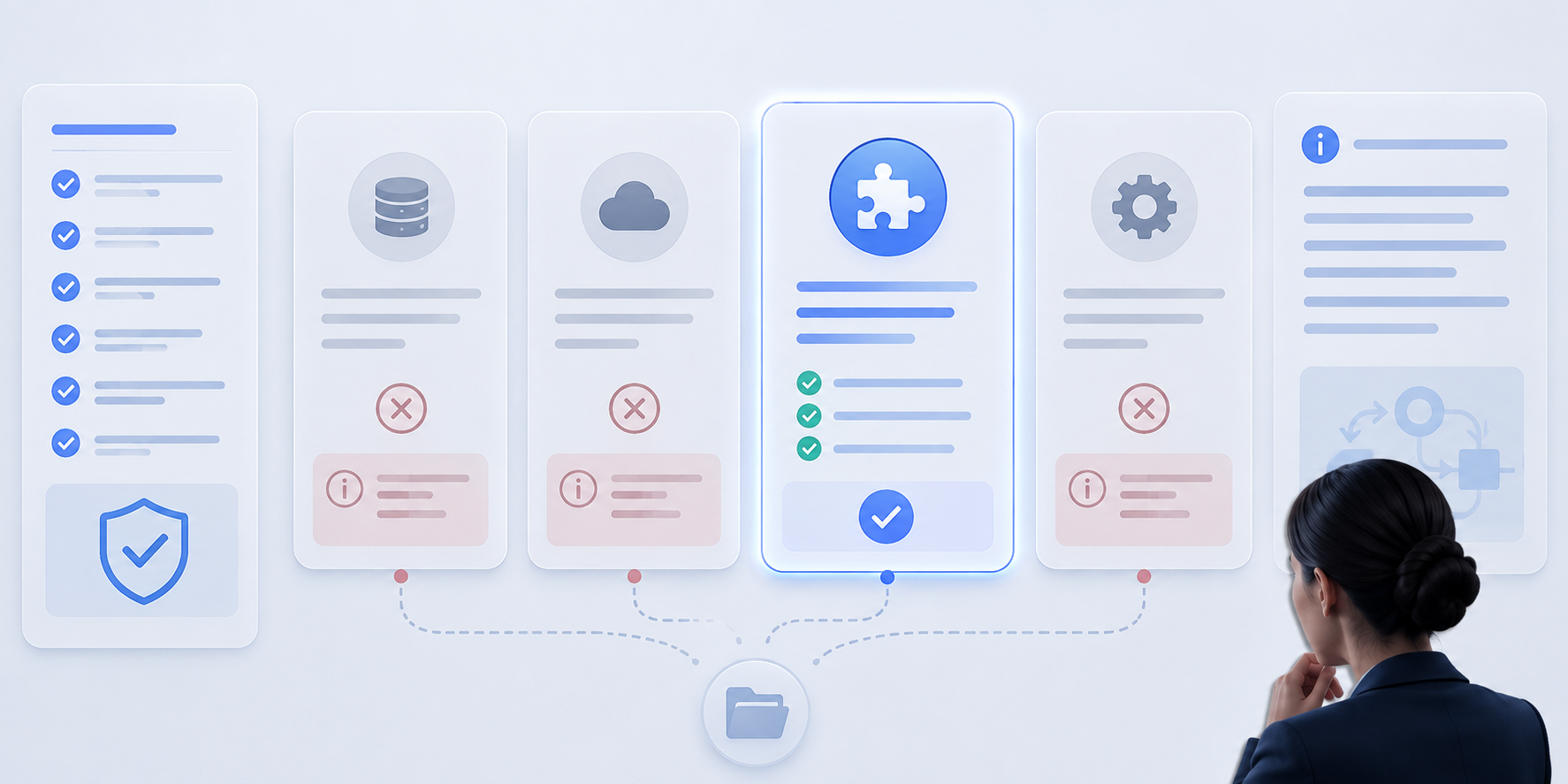
Connect business systems through a controlled integration layer
Nine integration groups, declared scopes, attributable service identities, and typed events — with connection health visible rather than assumed.

Choose a deployment model aligned with organizational and regional requirements
Unavailable options stay visible with an explanation rather than disappearing. No option is recommended without requirements you provide.
Regional hosting
Processing and storage in a selected region with residency-aware routing.
Dedicated private cloud
Isolated tenancy with enhanced operational controls.
Enterprise single-tenant
Dedicated workload and data infrastructure per customer.
Sovereign deployment
Region-restricted operations, administration, and support model.
On-premise deployment
Customer-operated infrastructure within their own boundary.
Customer-controlled keys
Platform-managed keys, BYOK, HYOK, or customer-controlled keys.
Adopt governed operations without forcing a blind cutover
Five controlled phases. A phase cannot be marked ready without an owner, criteria, evidence, and approval.
Discover
Map systems, entities, jurisdictions, owners, controls, data, integrations, and evidence requirements.
Model
Configure organizational structures, policies, authority, workflows, obligations, and role access.
Shadow Mode
Observe and compare proposed policy decisions, workflows, exceptions, and evidence without authorizing production actions.
Controlled activation
Activate selected modules, entities, jurisdictions, and workflows behind approval gates.
Expand & assure
Add scope, measure exceptions, validate evidence, and improve controls.

See where operations, controls, and evidence need attention
Every metric carries a definition, source status, time range, and scope. There is no individual productivity score and no behavior-policing metric.
Flow and timeliness
Actions in progress · approvals pending · obligations due · cycle time · exceptions · overdue items.
Control behavior
Policy decisions · approval routes · delegated authority usage · segregation conflicts · overrides · escalations.
Assurance state
Evidence completeness · manifest status · missing sources · exports · retention locks · verification state.

- Executive operations
- Finance governance
- Contract obligations
- Workforce compliance
- Jurisdiction obligations
- Audit readiness
- Integration health
Portfolio dimensions: entity · jurisdiction · function · module · workflow · role · date · status. Views are role-aware; exports are permission-gated, scoped, and audited.
A governance-first operating layer — not a conventional ERP category
ZoikoSuite is designed to connect business operations with policy, authority, evidence, jurisdiction context, governed AI, and cross-functional workflows. Depending on implementation scope, it may complement, integrate with, consolidate, or replace selected legacy processes and systems.

Diligence pathways, with every claim qualified
Security, compliance, assurance, sovereignty, customer readiness, and legal boundaries — each with its verified status and review date.
- Zero-Trust Architecture
- Identity and Access Management
- Encryption and Key Management
- Application and API Security
- Incident Response
- Business Continuity
- Compliance overview
- SOC 2 readiness
- ISO 27001 alignment
- GDPR controls
- CCPA controls
- Data Processing Agreement
- Subprocessor list
- Records retention
- Responsible AI
- Accessibility
- Evidence Architecture
- Immutable Audit Trails
- Policy Decision Logging
- Evidence Manifests
- Audit Readiness
- Internal Controls
- Segregation of Duties
- Data Residency
- Regional Hosting
- Dedicated Private Cloud
- Enterprise Single-Tenant
- Sovereign Deployment
- On-Premise Deployment
- Key options and recovery
- Documentation
- Architecture Library
- Integration Guide
- Migration Guide
- Support Center
- System Status
- Security disclosure
- Data Processing Agreement (PDF - opens in a new tab)
- Accessibility statement
- Responsible AI policy
- Trust Center
Build governed operations across entities, jurisdictions, and functions
See how ZoikoSuite can support your finance, workforce, legal, tax, compliance, procurement, evidence, analytics, integration, and deployment requirements.

Procurement-grade answers
Each answer opens with a direct sentence, then adds qualified detail. All answers are present in the page source.
ZoikoSuite is a governed business operations intelligence platform for connecting execution, governance, evidence, analytics, and governed AI across business functions.
It is built for organizations that operate through multiple entities and jurisdictions, where authority, obligations, and evidence cannot be fragmented across systems.
Govern your global operations with confidence
Unify finance, workforce, legal, tax, compliance, and commercial operations under one governed platform.